Early life and formative influences
Born in 1769 on the island of Corsica, Napoleon Bonaparte’s early years were shaped by the island’s recent acquisition by France and its lingering Italian cultural influences. His family, of minor nobility, secured him a place at French military academies, where he exhibited exceptional aptitude in mathematics and military strategy. These formative experiences instilled in him a sense of ambition and a belief in meritocratic advancement.
The French Revolution: a catalyst for opportunity
The outbreak of the French Revolution in 1789 dismantled the traditional hierarchies of the Ancien Régime, creating a power vacuum and a demand for capable leaders. The revolution’s emphasis on merit over birthright allowed individuals like Napoleon to ascend rapidly. His alignment with revolutionary ideals and his military prowess positioned him favorably amid the chaos.
Military campaigns and rising prominence
Napoleon’s military acumen became evident during the Italian Campaign of 1796–1797, where he led French forces to significant victories against Austrian armies. These successes not only expanded French territory but also elevated his status as a national hero. His subsequent Egyptian Campaign in 1798, though less successful militarily, enhanced his reputation as a leader willing to undertake bold initiatives.
The Coup of 18 Brumaire and consolidation of power
In 1799, political instability plagued the French government. Capitalizing on this, Napoleon orchestrated the Coup of 18 Brumaire, effectively overthrowing the Directory and establishing the Consulate, with himself as First Consul. This move marked the end of the revolutionary period and the beginning of his authoritarian rule.
Reforms and establishment of the Empire
As First Consul, Napoleon implemented a series of reforms that stabilized France:
- Legal reforms: Introduction of the Napoleonic Code, standardizing laws across France.
- Educational reforms: Establishment of lycées to train civil servants and military officers.
- Economic reforms: Creation of the Bank of France to stabilize the economy.
In 1804, leveraging his popularity and the relative stability he brought to France, Napoleon crowned himself Emperor, signaling the birth of the First French Empire.
Strategic use of propaganda and public image
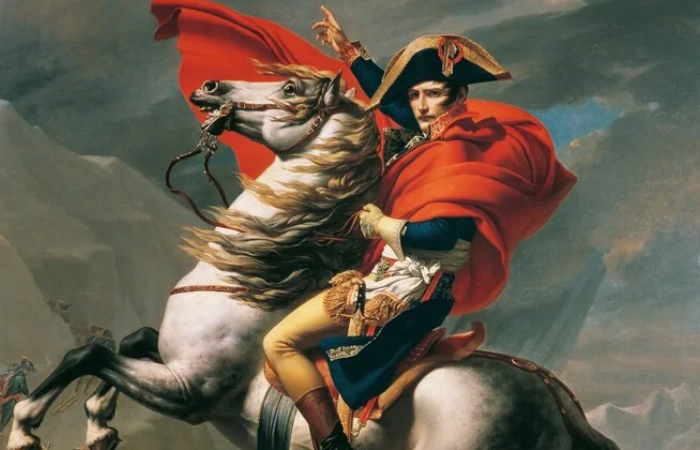
Napoleon understood the power of image and propaganda. He commissioned artworks and controlled narratives that portrayed him as a heroic and benevolent leader. This strategic self-presentation bolstered public support and legitimized his authority.
Military dominance and expansion of influence
Under Napoleon’s leadership, France engaged in a series of conflicts known as the Napoleonic Wars, extending French influence across much of Europe. His military strategies and organizational skills led to numerous victories, further consolidating his power and spreading revolutionary ideals beyond France’s borders.
Legacy and impact on Europe
Napoleon’s rise reshaped the European political landscape. His reforms influenced legal systems across the continent, and his emphasis on meritocracy challenged traditional aristocratic privileges. While his eventual defeat led to the restoration of monarchies, the changes he implemented had lasting effects on European governance and society.